BARBARA NIESEN · PAINTING, ASSEMBLAGE & POETRY

Reading becomes
a material encounter.

Mit allen Sinnen — With All the Senses is a coherent body of twenty literary assemblages, opening into an exhibition that brings painting and poetry into dialogue with voice, music, scent, taste and participation.

20 original works3 literary conversations2015–2026
Der Aromat · after Christian Morgenstern · 2026An original assemblage by Barbara Niesen
PAINTING ↔ POETRY

01 / THE IDEA

A poem does not end
at the edge of the page.

A word can suggest a rhythm, a colour, a texture, an object. Barbara Niesen takes that invitation into the material world. Her assemblages are independent visual responses to poems by Ernst Jandl, Christian Morgenstern and Rainer Maria Rilke. Handwritten language meets painted surfaces, found objects, botanical material and textiles. The poem remains present, but its encounter with matter opens another way of reading.

The literary work becomes a point of departure for an independent image.

The physical assemblages are the artistic core of the project. The exhibition extends the encounter through other senses.

PODCAST / ROBERT NIESEN

Listen: Mit allen Sinnen

In this episode of Kunst sehen, besser fühlen, Robert Niesen introduces the encounter between Barbara Niesen’s literary assemblages, poetry, voice, scent and taste.

English AI narration · 4:35 · German original · 5:19

English: a complete translated adaptation of Robert Niesen’s episode, narrated by an AI voice. The German original loads from LetsCast via Podtrac only when selected and played.

Episode and show notes on LetsCast ↗
Read the English transcript

Seeing Art, Feeling Better. The podcast by Der Kulturvernetzer. My name is Robert Niesen.

When you enter an exhibition, you leave more than your coat at the cloakroom. You leave four of your five senses behind. The eye is allowed everything. The nose is supposed to smell nothing except floor polish. The tongue never even gets a look in, and the hands are under general suspicion.

We build exhibitions for a single organ. Today, I want to tell you about a work that resists that idea. And I will begin where it began: with three poets.

Over the years, the artist Barbara Niesen, born Timpert, has created four cycles of work: assemblages developed in dialogue with poetry. Two respond to Ernst Jandl, one to Christian Morgenstern, and one to Rainer Maria Rilke. Three poets who could hardly be more different. And that is precisely what makes the encounter so compelling.

Jandl takes language apart. For him, a word is not a vehicle for meaning, but an object. He turns it around, breaks it open, listens to how it sounds when its meaning is taken away. If you only read Jandl, you are missing something. You have to hear him.

Morgenstern invents. He creates beings out of language that do not exist, and lets them wander through his poems as though it were perfectly ordinary. It is comedy. But beneath the comedy lies a serious question: what exists simply because we have a word for it?

And Rilke turns inward. For him, a poem is not a game, but a state of being. Autumn Day. To Be Said Before Sleep. Apprehension. Titles that are already moods before you have read a single line. Three answers to the same question: what is a word made of? Sound, invention, feeling. Now imagine someone answering that question with material.

That is exactly what these assemblages do. Paper, paint, rust, a found object, a trace. And in many of them, language itself appears within the image. You see a word before you read it. First it is form, then meaning. Standing before it, you do two things at once that you would normally do one after the other.

But a cycle responding to Jandl that simply hangs on the wall remains incomplete. The sound is missing. So a voice joined the work. Malte Sonnenfeld is an actor and voice artist. When he recites these poems, the process is reversed. What lies silent in the image becomes audible. And you realise how much a poem depends on its duration. You can glance over an image in a second. A spoken poem takes as long as it takes.

Then came scent. Together with the Cologne perfumer Uwe Manasse, Timpert developed a fragrance composition. It is called Les Sœurs: The Sisters. The name is no accident. There is an old term for this: the sister arts. The idea that painting and poetry are siblings. In antiquity, one was called silent poetry, the other speaking painting.

If that is true, a third sister now joins them. And she is the most wilful of them all. You cannot skim a fragrance. You cannot smell faster. A scent takes the time it needs. And in the brain, it takes a route that bypasses rational reflection. That is why a smell can bring a memory back faster than a photograph. Alongside a Rilke poem, this is not an extra. It is the very heart of the matter.

That leaves taste. The Argentinian sommelier Soledad Sichert leads a tasting of fruit juices paired with the artworks. Not an accompaniment, but a correspondence. This juice with this image. And you will find that afterwards you stand differently before the work. Not because the juice has explained anything, but because, during the time it takes to taste, you could do nothing other than stay.

Now you might say: that is a pleasant effect. I believe the difference lies in the sequence. If you place a fragrance beside a finished image as an afterthought, that is decoration. But when a work itself calls for several senses, because it contains language and sound and material, it is only logical to give it those senses.

The real reason is time. The eye can skim; a scent cannot. A taste unfolds in stages. A sound is not finished until it is finished. The other senses insist on duration. And duration makes all the difference between passing by and having an experience.

You can find out where and when to experience this at cult-net dot art. In the next episode, we will explore a word that did not exist before. A word an artist invented because the existing ones were not enough.

I am Robert Niesen, Der Kulturvernetzer. Thank you for listening.
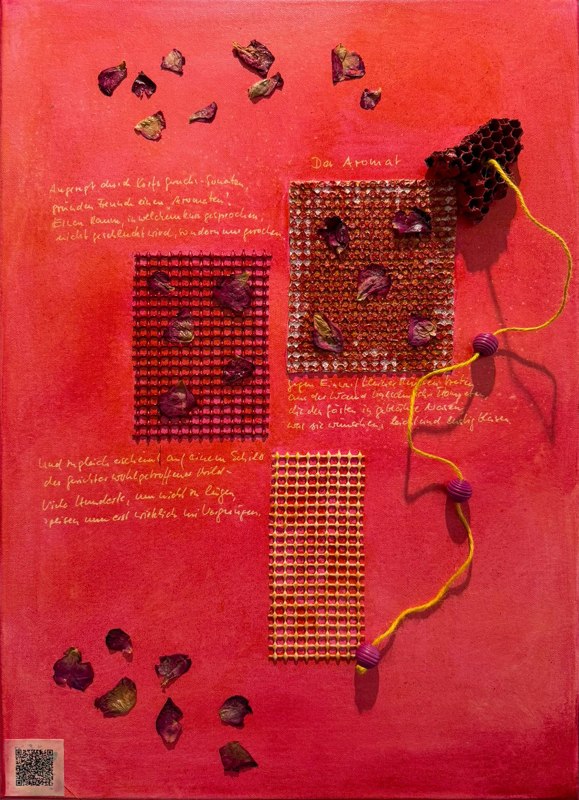
Material detail from the completed assemblage Der Aromat
MATERIAL CLOSE-UPDetail of the completed work Der Aromat, 2026. Painted ground, patterned grids, botanical fragments and thread.
01—20

JANDL
MORGENSTERN
RILKE

02 / HOW THE WORK TAKES SHAPE

From language
to layers of meaning.

Mit allen Sinnen grows from Barbara Niesen’s sustained engagement with the relationship between painting and poetry. Her literary work with Ernst Jandl began in 2015. In 2026, the project expanded through further Jandl assemblages and new cycles responding to Christian Morgenstern and Rainer Maria Rilke. Together, the twenty works hold different literary voices within one material conversation.

The poem is a starting point rather than an instruction to reproduce a scene. Its language, associations and atmosphere enter into dialogue with colour, surface and objects. A painted background, a handwritten passage or a found fragment can each carry a different kind of presence. The assemblage brings them into a shared visual space without requiring them to lose their separate identities.

This process is especially visible in the finished surfaces. Natural materials, textile elements, writing and relief interrupt a purely flat image. In Der Aromat, for example, the red painted ground meets patterned grids, botanical fragments and a winding thread. In Herbsttag, writing, plant material and layered pictorial space coexist. These are details of completed artworks, offered here as evidence of their material construction, rather than as photographs of stages in the studio.

The exhibition develops the same question beyond the individual canvas: how can a work be encountered through more than sight? Recitation and music make language audible. The scent Les Sœurs, developed by Barbara Niesen with perfumer Uwe Manasse, introduces an olfactory dimension. Taste enters through a planned juice tasting. The Dichtring, conceived and developed by Robert Niesen, adds participation: visitors initiate new combinations of literary fragments and image excerpts derived from Barbara’s works.

The original assemblages remain distinct from these digitally generated outcomes. The project brings both into a wider experience of reading, looking and sensing. Its first exhibition presentation is planned for 22 November 2026 at the Kranz Parkhotel in Siegburg, Germany; this documentation describes the works and the project as they stand before that opening.

03 / THE BODY OF WORK

Twenty assemblages.
Three poetic worlds.

Explore all twenty original works. Select a poet or open an image to see it in full. The titles retain their original language; the English titles are explanatory translations.

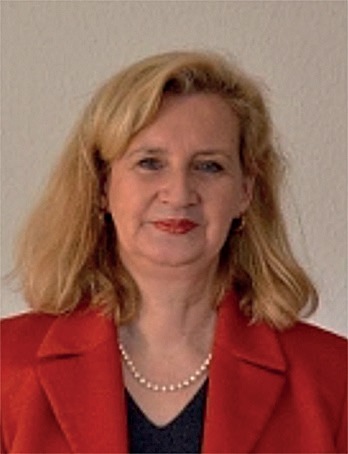
Prof. Dr. Irene Daum
Prof. Dr. Irene Daum · Neuropsychologist

PERCEPTION / NEUROPSYCHOLOGY

Looking at art – understanding perception

Prof. Dr. Irene Daum approaches Barbara Niesen’s assemblages from a neuropsychological perspective. How does our brain process colour, form, writing and materials? How do visual impressions connect with memories, associations and emotions? Her contribution to the exhibition opening offers a scientific approach to Mit allen Sinnen and invites visitors to become more aware of their own perception.

Irene Daum is a neuropsychologist whose research career has included London, Tübingen, Bochum and Padua. Her scientific interests include the brain mechanisms underlying perception, memory processes and creativity.

Introduction at the exhibition opening · 22 November 2026, 15:00

04 / AN EXPANDED ENCOUNTER

The image opens
towards the senses.

01

Sight

Twenty original assemblages: painting, writing, texture and objects.

02

Scent

Les Sœurs, developed by Barbara Niesen and Uwe Manasse / DUFTWERK.

03

Hearing

Poetry recitation and music extend the encounter into sound.

04

Taste

A planned juice tasting adds another way of attending to sensory differences.

05

Participation

The Dichtring creates new combinations initiated by the visitor.

Les Sœurs perfume flacons, illustrated in the exhibition information

SCENT / LES SŒURS

A fragrance that belongs to the work.

Barbara Niesen and perfumer Uwe Manasse / DUFTWERK developed Les Sœurs as an integral part of Mit allen Sinnen. The fragrance opens an olfactory relationship with the assemblages. Its premiere takes place at the exhibition opening on 22 November 2026.

Les Sœurs – Wenn Kunst duftet

In this episode of Kunst sehen, besser fühlen, Robert Niesen explores the relationship between Barbara Niesen’s assemblages, poetry and the fragrance Les Sœurs.

German-language audio · Robert Niesen · 10:42

Episode and show notes on LetsCast ↗
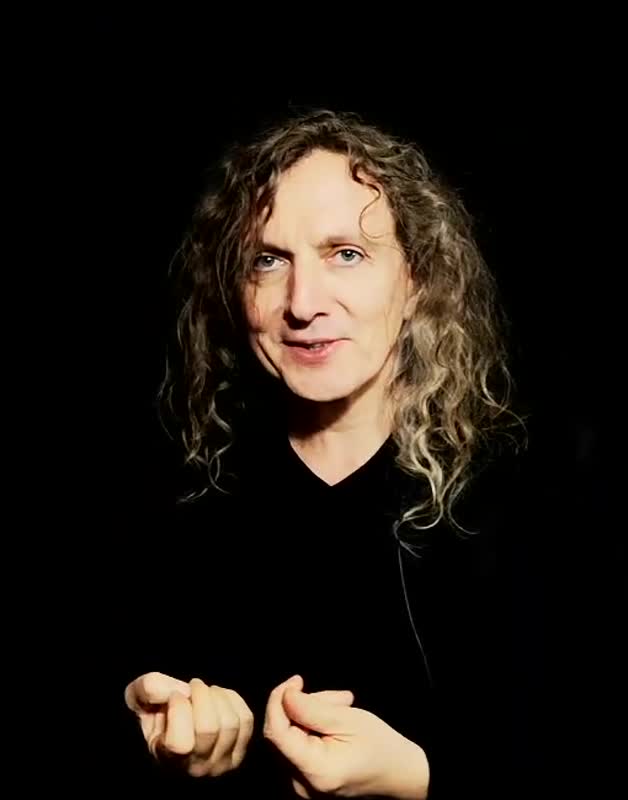
Uwe Manasse
Uwe Manasse · DUFTWERK

THE PERFUMER

How a fragrance unfolds.

Perfumer Uwe Manasse / DUFTWERK developed Les Sœurs together with Barbara Niesen. In this film, he explains how a fragrance unfolds and what top, heart and base notes mean.

Top, heart and base notes

German original recording with Uwe Manasse. Source: YouTube channel “Parfumeur” (@parfumeurmanasse).

Watch the original film on YouTube ↗
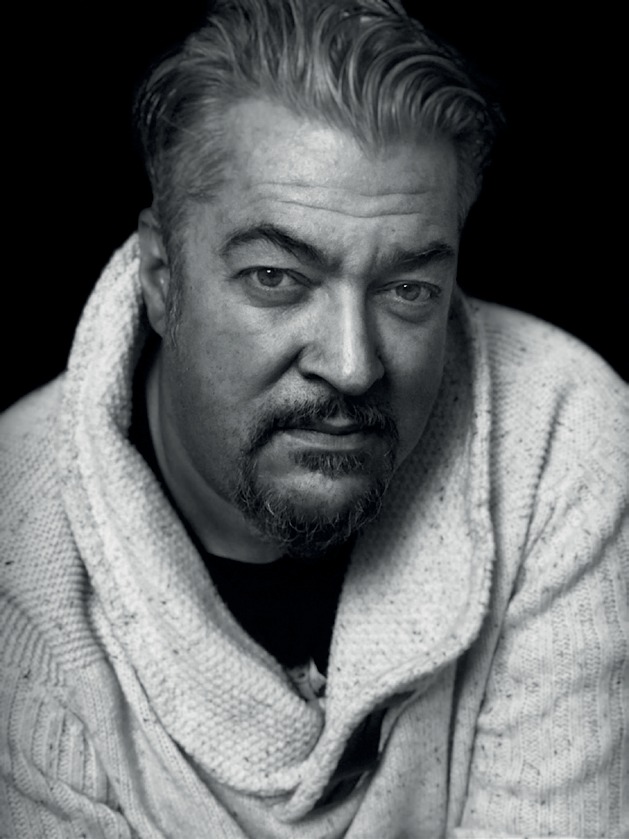
Malte Sonnenfeld / Michael Koslar

HEARING / POETRY

The written word becomes a voice.

Malte Sonnenfeld, also known as Michael Koslar, recites the poems behind Barbara’s assemblages. Five early Jandl works were already presented at the Rosenhang Museum with QR codes linking to his readings. At the mid-exhibition event he will recite, among other works, Der Aromat and Im Delikatessenladen.

Listen to the readings ↓

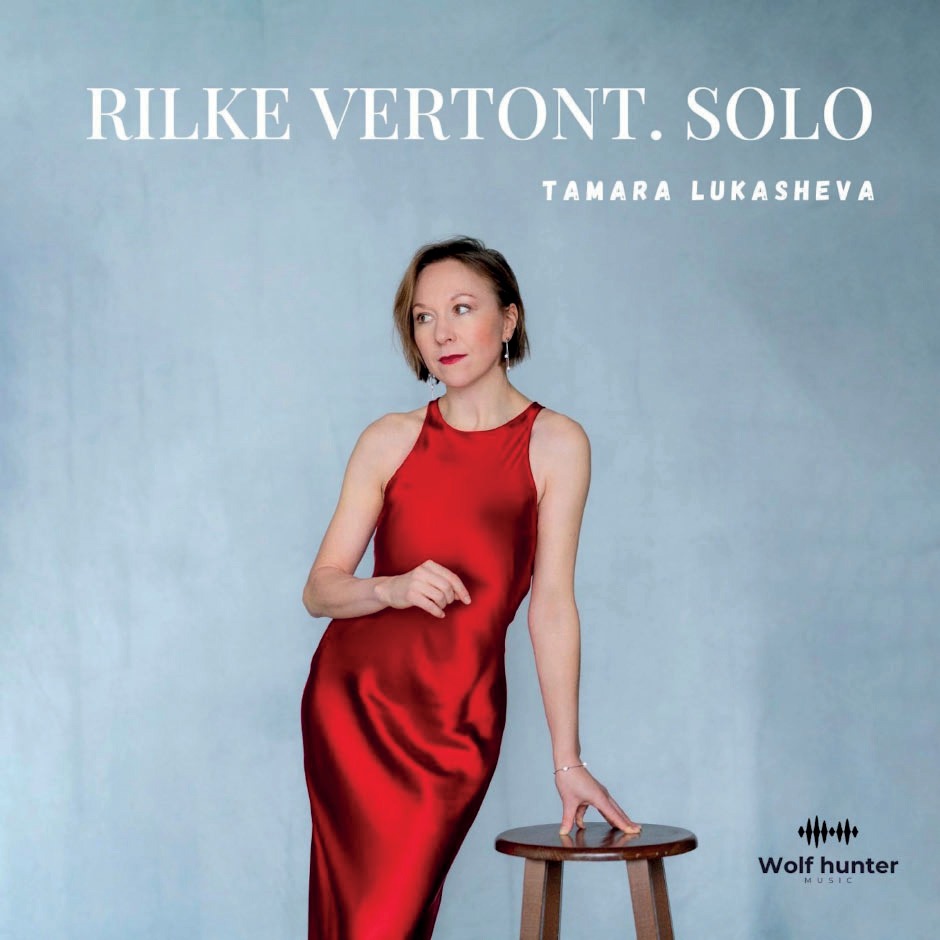
Rilke vertont. solo — programme image featuring Tamara Lukasheva

MUSIC / RILKE VERTONT. SOLO

Poetry between voice and piano.

Tamara Lukasheva performs her own settings of Rilke’s poetry, accompanying herself at the piano. Arpeggios, dense harmonies and passages for voice alone give the poems contrasting musical forms. Closing event: 14 March 2027, 16:00.

Click to load the YouTube video. This connects your browser to YouTube. Playback and cookies are subject to YouTube’s policies.

Open video on YouTube ↗

AUDIO / MALTE SONNENFELD

Listen to the poems

Read by Malte Sonnenfeld / Michael Koslar · German-language recordings. Select a recording and press play. All recordings play directly on this website.

Ernst Jandl

Alphabetical by original title

der beschriftete sessel

Ernst Jandl · J1

English: a new adaptation, read by an AI voice. German: the original recording by Malte Sonnenfeld.

Show / hide poem text

English adaptation · der beschriftete sessel

i has an armchair JANDL writ big on back if ever i not knowing is i me or is i not i only got to sit down and wait till someone coming past behind and whisper me

der tagesplan

Ernst Jandl · J2

English: a new adaptation, read by an AI voice. German: the original recording by Malte Sonnenfeld.

Show / hide poem text

English adaptation · der tagesplan

yesterday i made myself a daily plan for today today i get up and leave it unread for a good long while it says what has not yet been done and all of it is to be done today and who is to be the one to do it that is not a good question

die seele

Ernst Jandl · J3

English: a new adaptation, read by an AI voice. German: the original recording by Malte Sonnenfeld.

Show / hide poem text

English adaptation · die seele

with one hand the boy points upwards with the other at the fresh mound of earth and laughs if grandfather is down there how can he be up there oh yes the soul

die stelle

Ernst Jandl · J4

English: a new adaptation, read by an AI voice. German: the original recording by Malte Sonnenfeld.

Show / hide poem text

English adaptation · die stelle

there i sit down to make a poem there i am sitting to make a poem there i have sat to make a poem there it came into being there it came to nothing

frei und schlecht

Ernst Jandl · J5

English: a new adaptation, read by an AI voice. German: the original recording by Malte Sonnenfeld.

Show / hide poem text

English adaptation · frei und schlecht

i am free and i feel unwell why should i not feel unwell? of course i should not feel unwell and i do not feel unwell either. then again i might not feel unwell either. then i would say: i am free and i do not feel unwell.

glückwunsch

Ernst Jandl · J6

English: a new adaptation, read by an AI voice. German: the original recording by Malte Sonnenfeld.

Show / hide poem text

English adaptation · glückwunsch

we all wish everyone all the best: that the aimed blow should only just miss him; that, struck though he is, he should not visibly bleed; that, bleeding though he is, he should never bleed to death; that, if bleeding to death, he should feel no pain; that, torn apart by pain, he should find his way back to the place where he had not yet taken the first wrong step. we each wish everyone all the best

im delikatessenladen

Ernst Jandl · J7

English: a new adaptation, read by an AI voice. German: the original recording by Malte Sonnenfeld.

Show / hide poem text

English adaptation · im delikatessenladen

please give me a tin of may meadow a little higher up but not too steep so one can still sit on it. well then perhaps a snowbank, deep frozen without winter sports enthusiasts. a spruce nicely covered in snow may be included. not that either. that leaves the hares, i see you have them hanging there. two or three will do. and a hunter, of course. where do you hang the hunters?

jetzt lege ich mich schlafen

Ernst Jandl · J8

English: a new adaptation, read by an AI voice. German: the original recording by Malte Sonnenfeld.

Show / hide poem text

English adaptation · jetzt lege ich mich schlafen

now i lie down to sleep because i am sleepy and pretend to be asleep until i have fallen asleep

postfach 227

Ernst Jandl · J9

English: a new adaptation, read by an AI voice. German: the original recording by Malte Sonnenfeld.

Show / hide poem text

English adaptation · postfach 227

where you going? going post. where you coming from? from post. what you done? had a look to see if someone dared to write to me.

sommerlied

Ernst Jandl · J10

English: a new adaptation, read by an AI voice. German: the original recording by Malte Sonnenfeld.

Show / hide poem text

English adaptation · sommerlied

we are the people on the meadows soon we are the people under the meadows and become meadows, and become wood that country holiday will do us good

Christian Morgenstern

Alphabetical by original title

Der Aromat

Christian Morgenstern · M1

English: a new adaptation, read by an AI voice. German: the original recording by Malte Sonnenfeld.

Show / hide poem text

English adaptation · Der Aromat

Inspired by Korf's sonatas made of scent, friends found an Aromat establishment. A room where, briefly stated, no one eats: one only smells the dishes and the treats. Put in a little coin, and from the wall balsamic trumpets answer to your call. Into the guests' flared nostrils, light and gay, they blow whatever scents the guests may say. And on a sign appears, precisely drawn, a picture of the dish whose scent is borne. Now hundreds, and I tell no lies, confess: at last their dining is pure happiness.

Der Lattenzaun

Christian Morgenstern · M2

English: a new adaptation, read by an AI voice. German: the original recording by Malte Sonnenfeld.

Show / hide poem text

English adaptation · Der Lattenzaun

There was a picket fence one day, with gaps to let you look its way. An architect who saw it there appeared one evening, seized the air, and took the gaps out, one by one, to build a mighty house upon. The fence stood foolish, all forlorn: just wooden slats with nothing worn. A sight so dreadful, foul and grim, the Senate confiscated him. The architect, meanwhile, had gone to Afri, or Ameri, con.

Die Schildkröte

Christian Morgenstern · M3

English: a new adaptation, read by an AI voice. German: the original recording by Malte Sonnenfeld.

Show / hide poem text

English adaptation · Die Schildkröte

A thousand years of age am I, each day a little older; the Gothic king named Theobald once reared me in a holder. Since then, so much has come to pass, but none of it I know; a merchant now in Heilbronn town exhibits me for show. I do not know the face of death, nor dying's fret and fluster: I am the tor, I am the tor, I am the tor, tor, tortoise.

Die zwei Wurzeln

Christian Morgenstern · M4

English: a new adaptation, read by an AI voice. German: the original recording by Malte Sonnenfeld.

Show / hide poem text

English adaptation · Die zwei Wurzeln

Two ancient fir-tree roots converse, Deep in the forest's universe. What rustles in the boughs on high Is whispered down below nearby. An ageing squirrel sits with these, And knits them stockings at its ease. One root says: knig. The other: knay. And that's enough for one whole day.

Philanthropisch

Christian Morgenstern · M5

English: a new adaptation, read by an AI voice. German: the original recording by Malte Sonnenfeld.

Show / hide poem text

English adaptation · Philanthropisch

A nervous person in a meadow would be better off without; let that person learn to manage mostly with the meadow out. Hardly has he lain on grasses, ant and grasshopper draw near; worm and gnat and earwig gather, centipedes and bees appear. Now the bumblebee calls: Charge! A nervous person in a meadow would do better to arise and to seek some other Eden: away, for instance, would be wise.

Rainer Maria Rilke

Alphabetical by original title

Bangnis

Rainer Maria Rilke · R1

English: a new adaptation, read by an AI voice. German: the original recording by Malte Sonnenfeld.

Show / hide poem text

English adaptation · Bangnis

In the withered wood there is a birdcall that seems without meaning in this withered wood. And yet the rounded birdcall rests within this moment that brought it forth, broad as a sky above the withered wood. Everything yields and finds room in that cry: the whole land seems to lie within it, soundless, the great wind seems to nestle in its shelter, and the minute, wishing to move on, has stepped out of it, pale and still, as though it knew of things that everyone must die of.

beau papillon près du sol

Rainer Maria Rilke · R2

English: a new adaptation, read by an AI voice. German: the original recording by Malte Sonnenfeld.

Show / hide poem text

English adaptation · beau papillon près du sol

Beautiful butterfly close to the ground, showing attentive nature the illuminated pages of your book of flight. Another folds shut at the edge of the flower whose scent we breathe: this is no moment for reading. And so many others still, tiny blue ones, scatter, floating and fluttering, like blue scraps of a love letter in the wind, a letter torn apart that someone was still writing while she to whom it was addressed hesitated at the door.

Die Braut

Rainer Maria Rilke · R3

English: a new adaptation, read by an AI voice. German: the original recording by Malte Sonnenfeld.

Show / hide poem text

English adaptation · Die Braut

Call me, beloved, call me aloud! Do not leave your bride so long at the window. In the old avenues of plane trees evening keeps watch no more: they are empty. And if you do not come to enclose me with your voice in the house of night, then I must pour myself out of my hands, out into the gardens of deepest blue.

Herbsttag

Rainer Maria Rilke · R4

English: a new adaptation, read by an AI voice. German: the original recording by Malte Sonnenfeld.

Show / hide poem text

English adaptation · Herbsttag

Lord: it is time. The summer was immense. Lay your shadow on the sundials, and let the winds run loose across the fields. Command the final fruits to reach their fullness; grant them two more days of southern sun, press them towards completion, and drive the last sweetness into the heavy wine. Who has no house now will not build one anymore. Who is alone now will remain so long, will wake, read, write long letters, and wander restlessly along the avenues, back and forth, when the leaves are drifting.

Zum Einschlafen zu sagen

Rainer Maria Rilke · R5

English: a new adaptation, read by an AI voice. German: the original recording by Malte Sonnenfeld.

Show / hide poem text

English adaptation · Zum Einschlafen zu sagen

I would like to sing someone to sleep, to sit beside someone and be. I would like to rock you, sing you small, and go with you out of sleep and into sleep. I would like to be the only one in the house who knew: the night was cold. And I would listen inward and outward, into you, into the world, into the wood. The clocks call to each other as they strike, and one sees down to the bottom of time. And below, a stranger is still walking and disturbing a stranger's dog. Beyond that comes silence. I have laid my wide-open eyes upon you; they hold you gently and let you go when something moves in the dark.

Sommelier Soledad Sichert

TASTE / SENSORY PAIRINGS

A taste in conversation with an image.

Argentinian sommelier Soledad Sichert selects fruit juices in response to Barbara Niesen’s works. She explains the correspondences between each juice and each image: an invitation to encounter the artworks through taste. Mid-exhibition event: 28 February 2027, 15:00.

Taste begins with attention

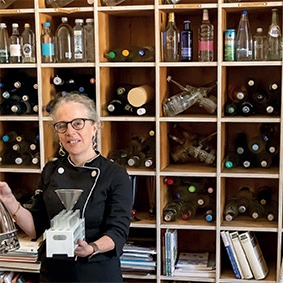
How different can water taste? In this film, sommelier Soledad Sichert shows how attentively we can experience even a familiar drink. She brings the same trained attention to Mit allen Sinnen: at the mid-exhibition event on 28 February 2027 at 15:00, she will lead a fruit juice tasting in dialogue with Barbara Niesen’s assemblages.

Conversation in Spanish · 10:10 minutes · choose German or English subtitles in the player. Interview: Micaela Lucero. Production: La Voz, Vía País and Los Andes.

Example of the five Dichtring rings, filled with excerpts from Barbara Niesen’s Jandl assemblagesJANDL5 RINGS
Example · Ernst Jandl
Five rings with excerpts from Barbara’s original assemblages. Open the interactive Dichtring ↗

A contemporary conversation
with a historical idea.

The Dichtring connects selected verse fragments with excerpts from Barbara’s original assemblages. Five rings determine the material; AI-assisted synthesis forms a new digital assemblage. A separate demonstration introduces Georg Philipp Harsdörffer’s historical Denckring. These interactive elements extend the exhibition; they do not replace the physical originals.

Dichtring concept and development: Robert Niesen. Original visual material: Barbara Niesen. Literary sources: Ernst Jandl, Christian Morgenstern and Rainer Maria Rilke.

Visit the Dichtring ↗Interactive installation · German-language interface

05 / THE ARTIST

Barbara Niesen

Painting. Objects. Language.

Barbara’s full portfolio ↗
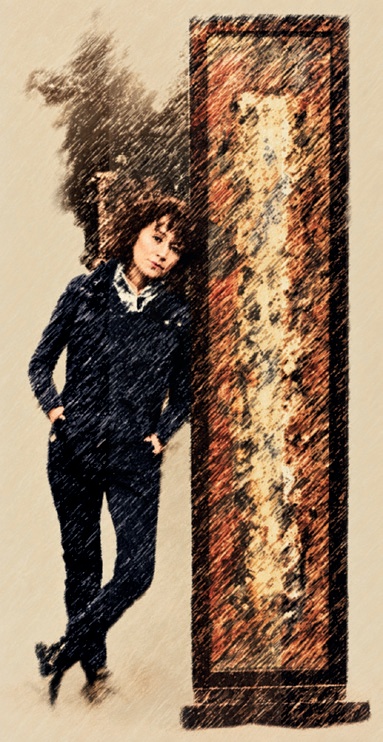
Barbara Niesen leaning against a stele
Barbara Niesen · portrait from the exhibition information

Barbara Niesen, also known through her birth name Timpert, lives and works in Nümbrecht, Germany. Her practice connects painting, collage and assemblage. Colour and structure provide a foundation for works in which found objects, natural materials, textiles and writing open the picture surface into a layered field of associations.

Her engagement with literary assemblage began with poems by Ernst Jandl in 2015. In 2026 she extended this dialogue through new work responding to Christian Morgenstern and Rainer Maria Rilke. The resulting project, Mit allen Sinnen, approaches poetry through the material possibilities of the image and through an expanded sensory exhibition experience.

Her wider practice includes the series Liniennetze, Sencha Flowers and Horizonte, as well as the large-format triptych Hidden Faces. Works from Sencha Flowers are represented in the Rosenhang Museum’s collection. Across these different bodies of work, she explores how images can be discovered through attention to surfaces, fragments, colour and human experience.

06 / THE EXHIBITION

Mit allen Sinnen
With All the Senses

Upcoming presentation · Kranz Parkhotel, Siegburg, Germany

The exhibition brings the twenty assemblages into a shared sensory setting. Its accompanying programme includes poetry recitation, music, scent and taste. The events are upcoming; the images on this page document the artworks themselves.

Opening22 November 2026 · 15:00
Mid-exhibition event28 February 2027 · 15:00
Closing event14 March 2027 · 16:00

People behind the encounter

Barbara Niesen
Artist; physical assemblages; co-development of Les Sœurs
Robert Niesen
Curatorial concept, project coordination, editorial presentation, Dichtring concept and development
Uwe Manasse
Co-development of the scent Les Sœurs · DUFTWERK
Malte Sonnenfeld
Moderation and poetry recitation
Prof. Dr. Irene Daum
Introductory contribution from a neuropsychological perspective
Tamara Lukasheva
Music · Rilke. Solo · closing event
Project enquiries ↗

Original title shown first. English titles are explanatory translations.