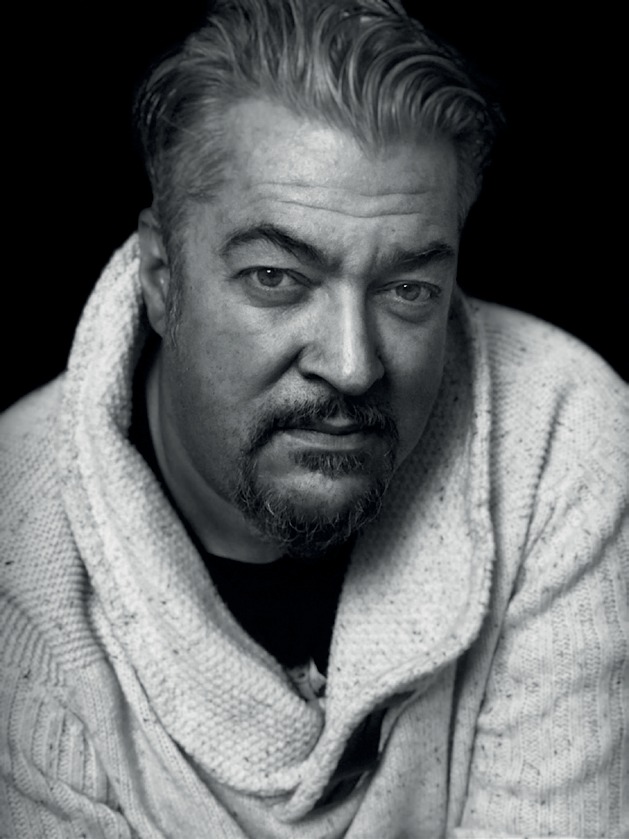
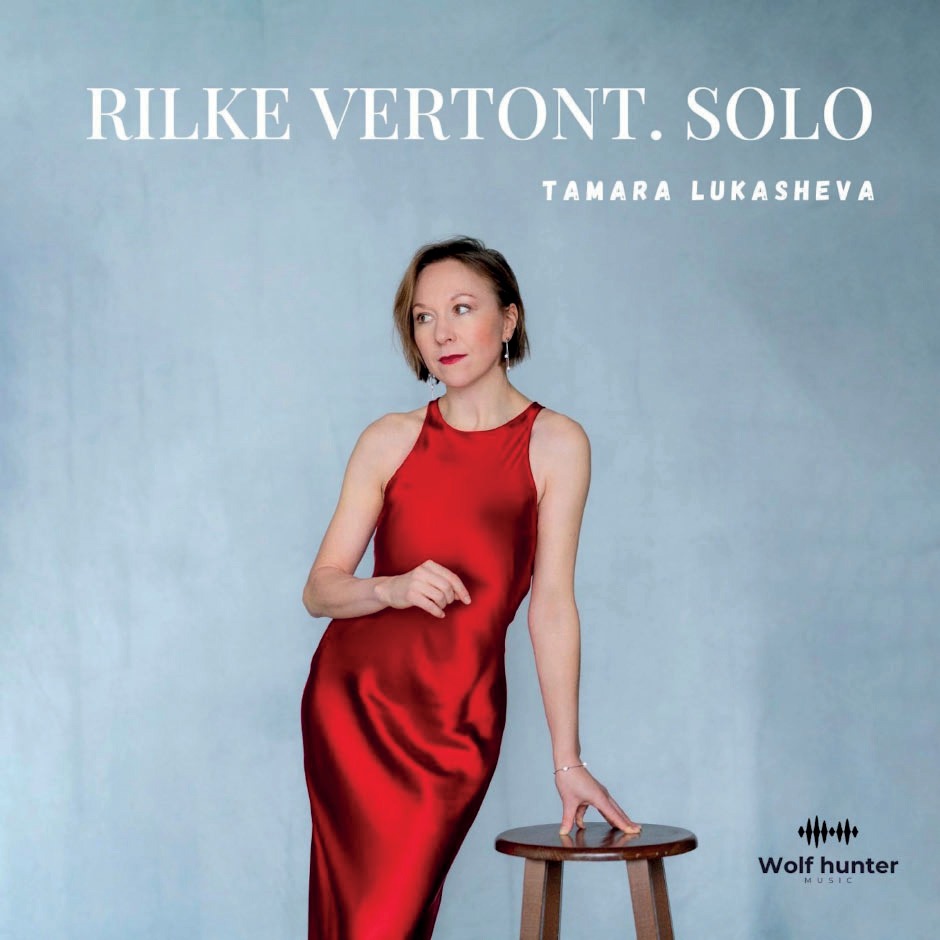
In this episode of Kunst sehen, besser fühlen, Robert Niesen introduces the encounter between Barbara Niesen’s literary assemblages, poetry, voice, scent and taste.
English: a complete translated adaptation of Robert Niesen’s episode, narrated by an AI voice. The German original loads from LetsCast via Podtrac only when selected and played.
Read the English transcript
Seeing Art, Feeling Better. The podcast by Der Kulturvernetzer. My name is Robert Niesen.
When you enter an exhibition, you leave more than your coat at the cloakroom. You leave four of your five senses behind. The eye is allowed everything. The nose is supposed to smell nothing except floor polish. The tongue never even gets a look in, and the hands are under general suspicion.
We build exhibitions for a single organ. Today, I want to tell you about a work that resists that idea. And I will begin where it began: with three poets.
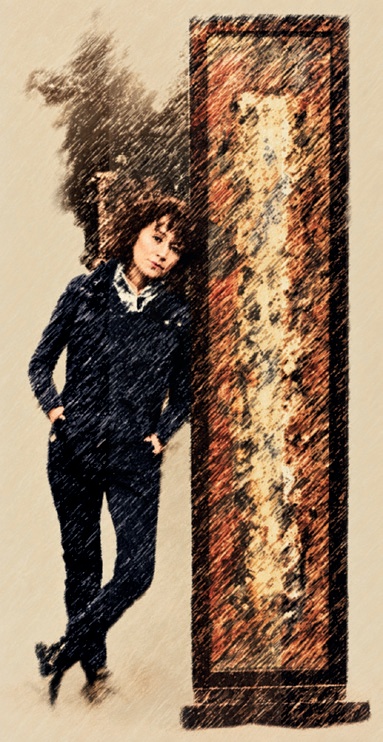
Over the years, the artist Barbara Niesen, born Timpert, has created four cycles of work: assemblages developed in dialogue with poetry. Two respond to Ernst Jandl, one to Christian Morgenstern, and one to Rainer Maria Rilke. Three poets who could hardly be more different. And that is precisely what makes the encounter so compelling.
Jandl takes language apart. For him, a word is not a vehicle for meaning, but an object. He turns it around, breaks it open, listens to how it sounds when its meaning is taken away. If you only read Jandl, you are missing something. You have to hear him.
Morgenstern invents. He creates beings out of language that do not exist, and lets them wander through his poems as though it were perfectly ordinary. It is comedy. But beneath the comedy lies a serious question: what exists simply because we have a word for it?
And Rilke turns inward. For him, a poem is not a game, but a state of being. Autumn Day. To Be Said Before Sleep. Apprehension. Titles that are already moods before you have read a single line. Three answers to the same question: what is a word made of? Sound, invention, feeling. Now imagine someone answering that question with material.
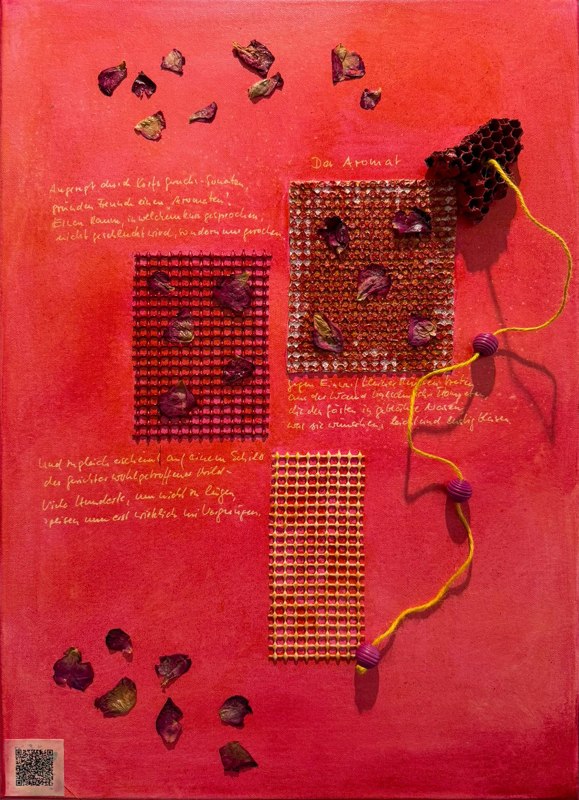
That is exactly what these assemblages do. Paper, paint, rust, a found object, a trace. And in many of them, language itself appears within the image. You see a word before you read it. First it is form, then meaning. Standing before it, you do two things at once that you would normally do one after the other.
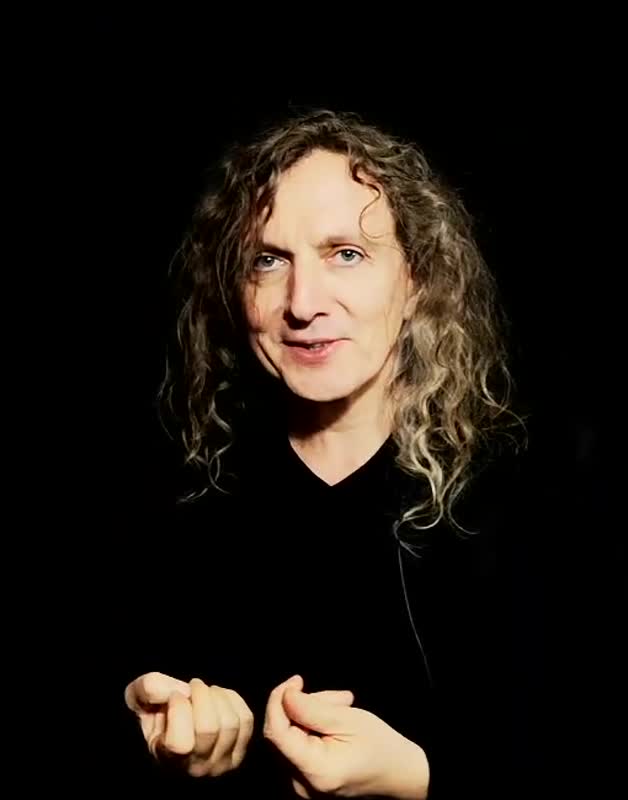
But a cycle responding to Jandl that simply hangs on the wall remains incomplete. The sound is missing. So a voice joined the work. Malte Sonnenfeld is an actor and voice artist. When he recites these poems, the process is reversed. What lies silent in the image becomes audible. And you realise how much a poem depends on its duration. You can glance over an image in a second. A spoken poem takes as long as it takes.
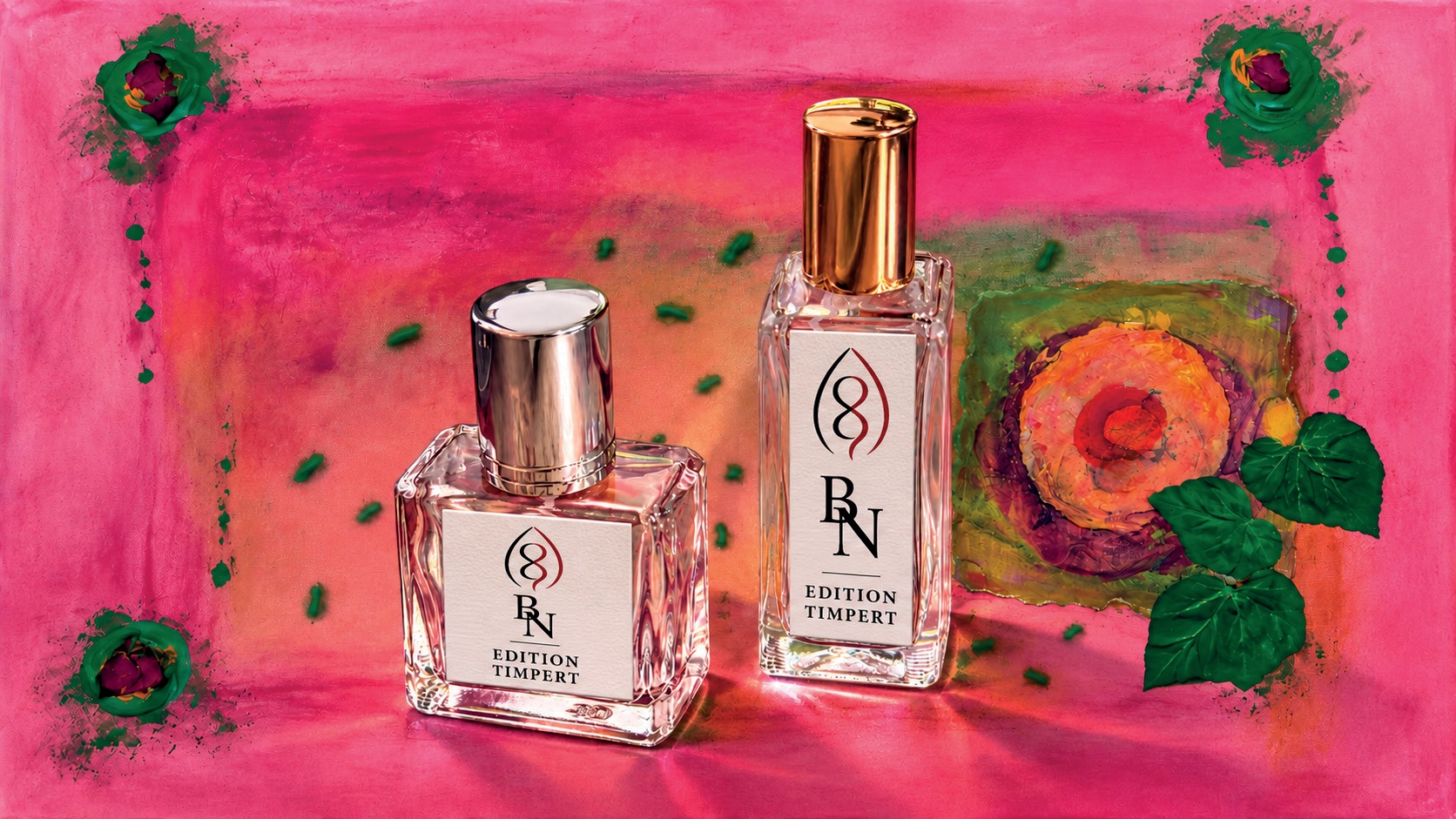
Then came scent. Together with the Cologne perfumer Uwe Manasse, Timpert developed a fragrance composition. It is called Les Sœurs: The Sisters. The name is no accident. There is an old term for this: the sister arts. The idea that painting and poetry are siblings. In antiquity, one was called silent poetry, the other speaking painting.
If that is true, a third sister now joins them. And she is the most wilful of them all. You cannot skim a fragrance. You cannot smell faster. A scent takes the time it needs. And in the brain, it takes a route that bypasses rational reflection. That is why a smell can bring a memory back faster than a photograph. Alongside a Rilke poem, this is not an extra. It is the very heart of the matter.
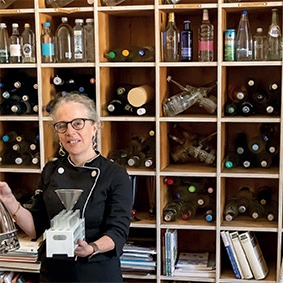
That leaves taste. The Argentinian sommelier Soledad Sichert leads a tasting of fruit juices paired with the artworks. Not an accompaniment, but a correspondence. This juice with this image. And you will find that afterwards you stand differently before the work. Not because the juice has explained anything, but because, during the time it takes to taste, you could do nothing other than stay.
Now you might say: that is a pleasant effect. I believe the difference lies in the sequence. If you place a fragrance beside a finished image as an afterthought, that is decoration. But when a work itself calls for several senses, because it contains language and sound and material, it is only logical to give it those senses.
The real reason is time. The eye can skim; a scent cannot. A taste unfolds in stages. A sound is not finished until it is finished. The other senses insist on duration. And duration makes all the difference between passing by and having an experience.
You can find out where and when to experience this at cult-net dot art. In the next episode, we will explore a word that did not exist before. A word an artist invented because the existing ones were not enough.
I am Robert Niesen, Der Kulturvernetzer. Thank you for listening.